On the night of December 31, New Year’s Eve, we found ourselves at the airport of Nice, the capital of the French Riviera. We did not deliberately choose this day, and to be honest, we would prefer to land on a regular day, not a sabbatical. But this was the last flight to Nice in the winter season, so we caught it and hoped for the best.
We landed at ten at night, and when we arrived at the exit hall and waited for the bags to arrive, it became clear that, as we thought, on New Year’s Eve there was no public transport from the field at this hour. We took a taxi (45 euros) directly to the hotel in the center of Nice – BEST WESTERN NICE COSY HOTEL. The hotel has a great location, only a few minutes from the train station and the large car park adjacent to it and close to shops and kosher restaurants.
The receptionist greeted us kindly. He took the trouble and went up to our room on the last floor, where we discovered that we had been given a surprise: in the room (we ordered a mini-suite) there was champagne in an ice bucket, chocolates and a New Year’s greeting card. It’s a shame that for kosher reasons we could not enjoy …
After we recovered, we went out to the balcony to look around. We managed to see some fireworks (especially hear) before we collapsed to sleep.
Trip to the French Riviera - Day One - Nice
We dedicated the first day to the city of Nice, the capital of the Riviera. Armed with a map and directions from the receptionist, we headed out to find the nearest tram stop, located exactly two minutes from the hotel. We got off at the Opéra station, near Place Masséna, and from there walked toward Castle Hill, passing through the Old Town.
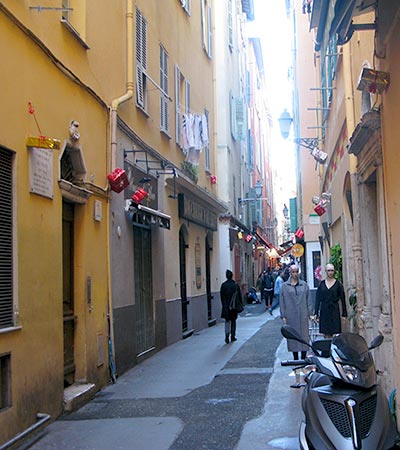
We wandered through the picturesque alleyways of the Old City. In the narrow streets, we saw beautifully decorated shops and elaborate window displays at a patisserie (bakery) and a chocolaterie (chocolate shop), featuring spectacular, mouth-watering creations. The Jewish Ghetto was also once located among these alleyways, the Rue Benoît-Bunico served as the center of the Ghetto starting in 1430.
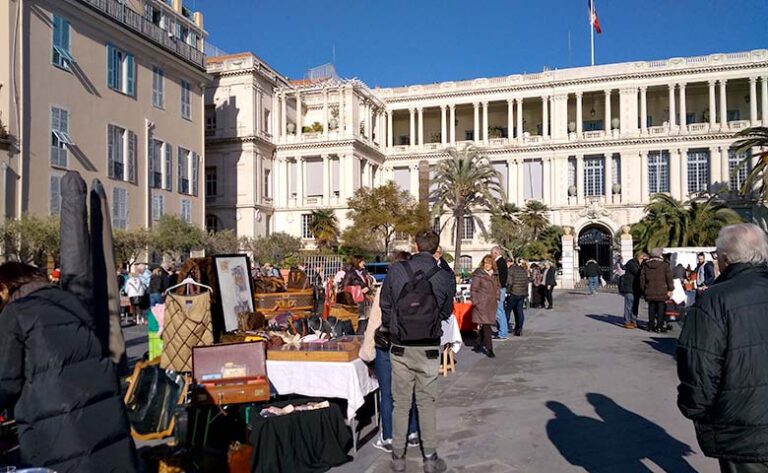
After getting a bit “lost” in the maze of narrow streets, we eventually made our way toward the sea and found ourselves at a huge antiques market located right on the waterfront. It turns out this is the Cours Saleya flower market, which transforms into an antiques market on Mondays. On other days of the week, it’s a typical Provençal market, featuring flowers, fruit, soaps, and various other goods.
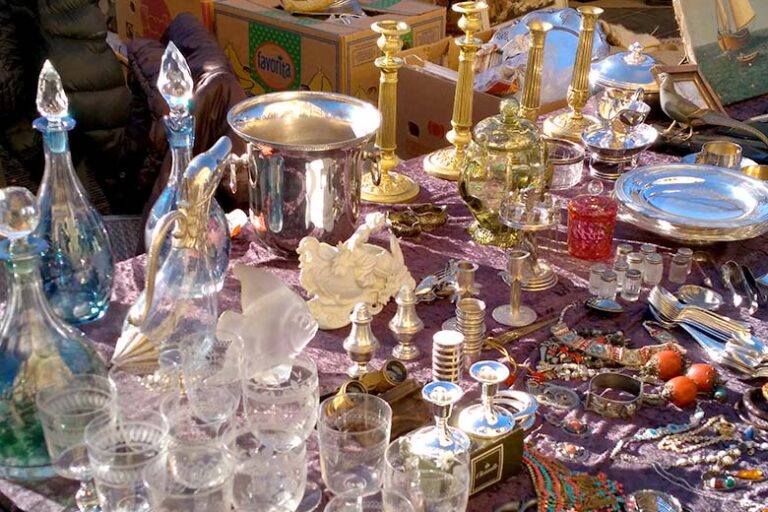
The stalls offered for sale works of art, beautiful tableware, vintage records, scarves, perfumes, and charming home accessories—items I would have bought quite a few of, had it not been for their high price and the fear that they might break on the way home.
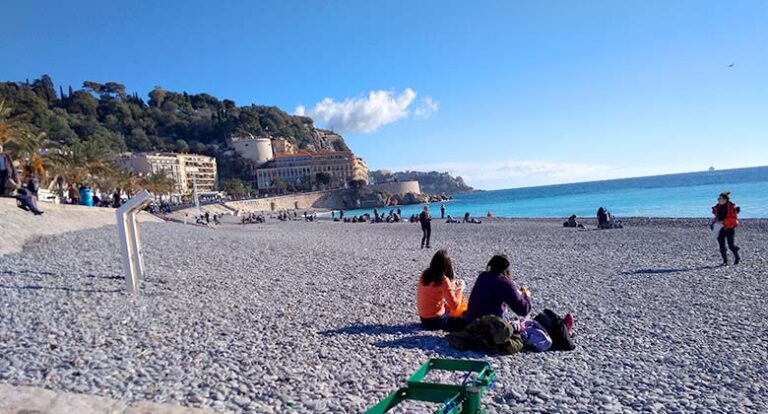
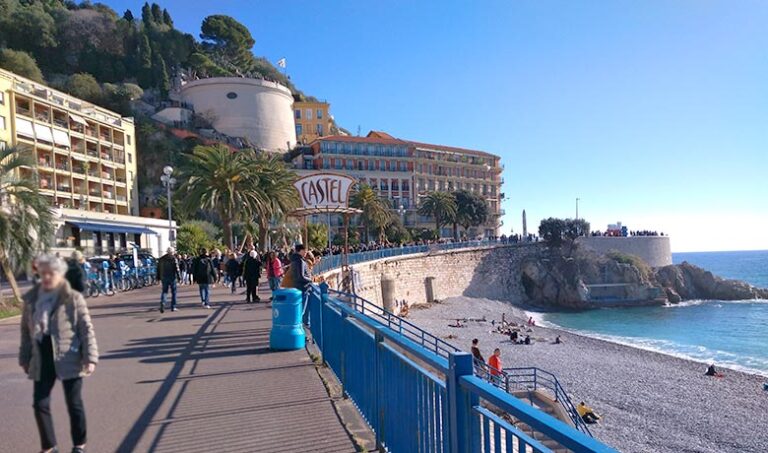
After a pleasant stroll among the market stalls, we headed out to the seaside promenade. Even in the heart of winter, the beach in Nice was inviting and bathed in sunshine. Crowds of people filled the promenade and the city streets, after all, it was New Year’s Eve, and many took advantage of the day off to go out. All around us, we heard plenty of French, Italian, and even Chinese but not a single word of Hebrew.
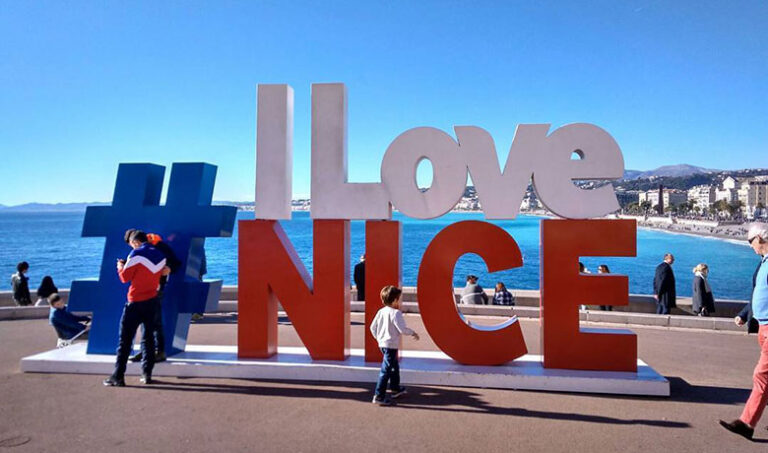
We continued our walk and arrived at a sign a fixture in any self-respecting city that reads “I LOVE NICE,” and we took a photo next to it, just like everyone else.
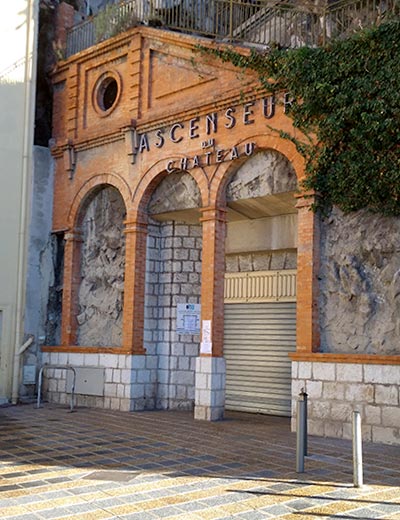
And so, we found ourselves at the foot of Castle Hill Colline du Château. We had intended to take the elevator, but it was closed for the holiday, so we headed for the stairs leading up the hill.
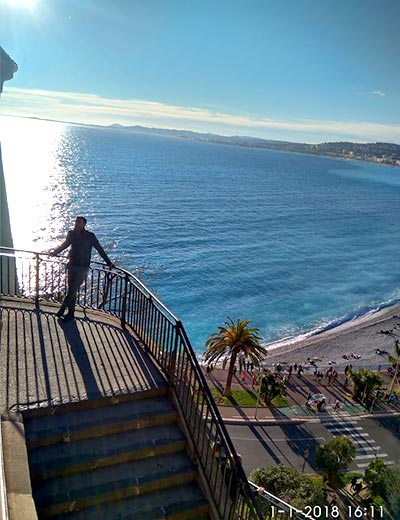
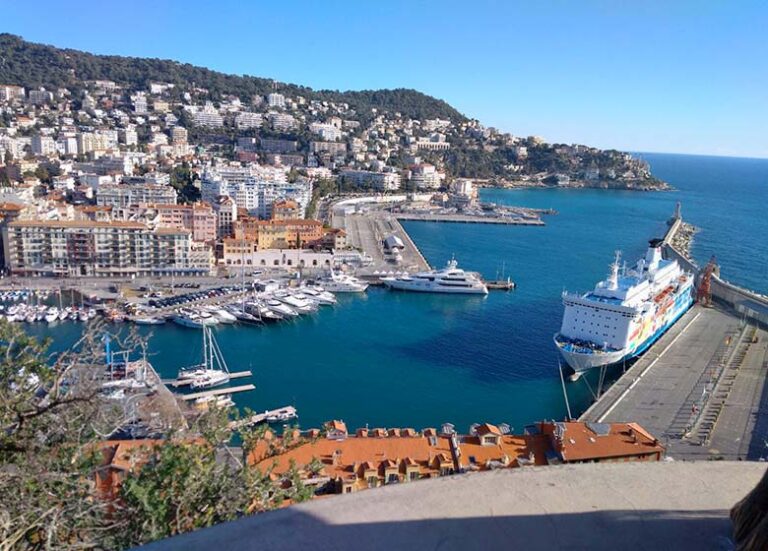
Ultimately, I was glad we walked up, because while climbing the stairs (which wasn’t bad at all) we stopped to take in a stunning view of the city and discovered charming little spots along the way, such as small squares, carved benches, and balconies overlooking the scenery, things we would have missed had we taken the elevator.
The view from the stairs to the hill
The Elevator to Castle Hill
The ascent of the hill follows a circular path, with staircases leading in several directions—some taking you to different spots on the hill. At times, we had to decide which way to go: toward the waterfall or toward the viewpoint? Ultimately, however, we managed to visit most of the sites on the hill, either on the way up or on the way back.
Tip: It is highly recommended to walk up the hill. The ascent is not difficult (unless you have mobility limitations), and there are plenty of spots to stop and rest along the way. This way, you can enjoy all the charming corners found on this vast hill.
We walked up the stairs along with many other people visiting the site, but it wasn’t a problem, the hill is huge, and there is room for everyone. Every now and then, we stopped to rest on a bench overlooking the view or at a lovely observation deck.
At the end of the climb, we reached the top of the hill, where there is a lovely park featuring nice playgrounds for children. A quaint tourist train—Un petit train à Nice passed by, it’s a great option for those who want to skip the stairs.
From above, a breathtaking view of the city of Nice unfolds, with the beaches and marinas of the Riviera stretching out beyond it. We gazed, unable to get our fill of such beauty.
After enjoying the stunning view, we continued to the next spot—towards the waterfall. It is an impressive artificial waterfall that flows from above, cascading through several levels.
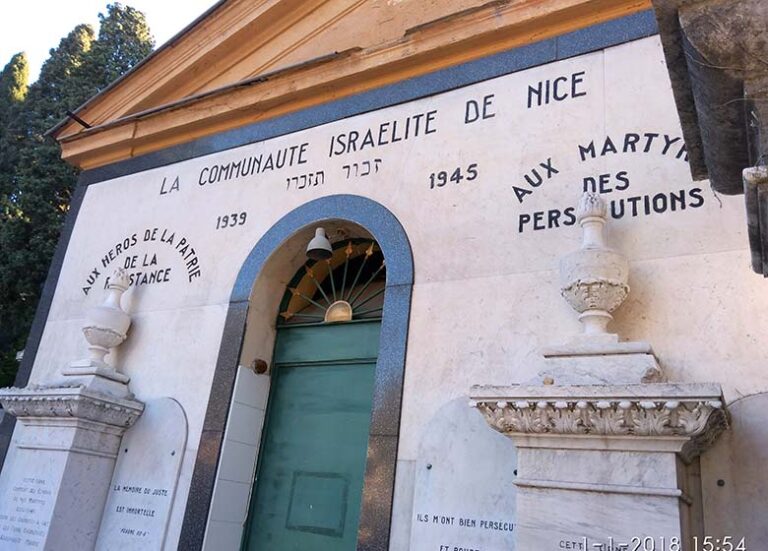
From the waterfall, we continued down the hill, I knew there was a Jewish cemetery in the area and wanted to visit it. We followed the signs toward the cemetery, and at the very first turn, we came across a monument commemorating the Righteous Among the Nations. Right nearby, we found the Jewish cemetery, which we identified immediately by the Stars of David and the Hebrew inscriptions.
Unfortunately, the cemetery gate was locked, it turns out there are official opening hours. We peeked through the fence and spotted a memorial for those who fell in World War II. The other headstones were also elaborate and well-crafted, some even shaped like the Tablets of the Covenant.
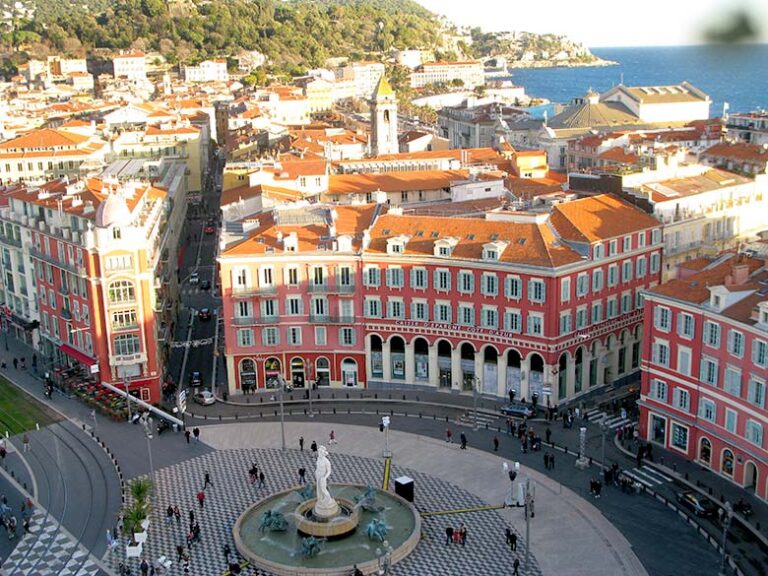
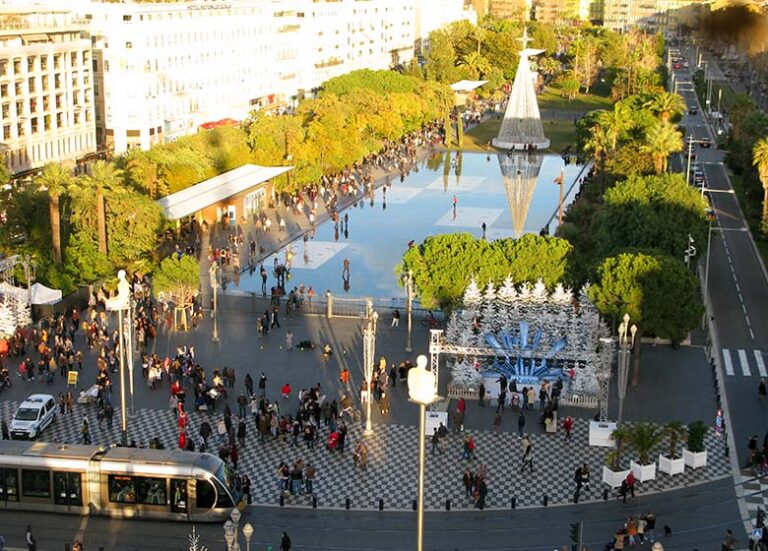
We descended from the castle hill and continued walking through the waterfront and the market toward the beautiful Piazza Messina. It is a circular square in a classic European style, framed by red buildings, with a lovely fountain featuring a massive statue at its center.
Messina Square as seen from the top of the Ferris wheel
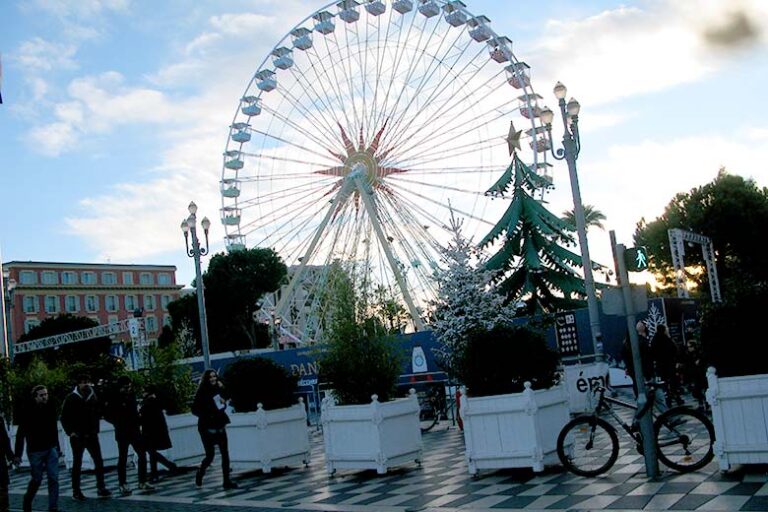
Near the square, we spotted the Ferris wheel we had seen earlier from the viewpoint above. It turns out the wheel is part of a temporary amusement park set up for the holidays. (Later on, we would see Christmas-themed amusement parks in every town along the Riviera.)
The amusement park was decorated in an extraordinary and breathtakingly beautiful way. On a whim, we decided to hop on the Ferris wheel. After a long but fast-moving line, we stepped into a carriage and soared upward. The view from the top of the Ferris wheel was absolutely breathtaking!
After the Ferris wheel, we continued wandering around the elegant area and came across a branch of “Galeries Lafayette” the famous store from Paris. As it was getting dark, we took the tram back to the hotel. We were hungry and looked for a kosher restaurant (there is a post with full details on kosher restaurants in Nice).
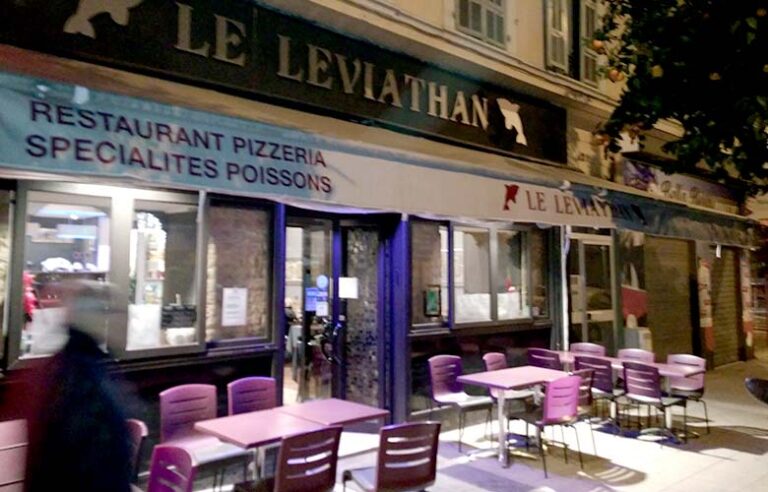
We chose the restaurant “Le Leviathan,” located a 5-minute walk from the hotel. When we arrived, it was relatively empty, but the place soon began to fill up. The waiter asked if we had a reservation, and although we said no, he managed to find us a table. (Tip: Make a reservation in advance.)
We ordered our dishes and waited. in the meantime, we were served popcorn and a tiny side dish of carrot salad, and we took in the pleasant surroundings. We waited, and waited, and waited. After a 20-minute wait, we asked the people sitting next to us if it was always like this, and they replied that the wait was likely longer than usual because it was the day after New Year’s Eve.
Finally, the food arrived. My husband ordered salmon, which was nice, and I had pasta with mushrooms and cream, which was a bit salty. The prices are quite reasonable, even slightly cheaper than in Israel and tipping is not mandatory in France.
Day Two – Villa Ephrussi, Èze, and Monaco
After managing perfectly well using public transportation within the city on the first day, we wanted to visit the surrounding towns over the following days, something much more convenient to do by car. At 10:00 AM, we arrived at the Europcar agency located at the train station and picked up the vehicle we had booked in advance: a compact, manual-transmission Ford. As always, we had reserved the car through the Economy Car Rental website at an excellent price, but the service we received at the agency came as an unpleasant surprise.
After a long wait, we presented our rental agreement to the clerk, who claimed that a municipal tax needed to be added. We pointed out the clause in the contract stating that the price is all-inclusive, taxes and everything else. She held us up, repeatedly insisting that she “didn’t understand.” In the end, we received the vehicle at the agreed-upon price, but only after wasting time and being left with an unpleasant feeling. In short: stay away from Europcar.
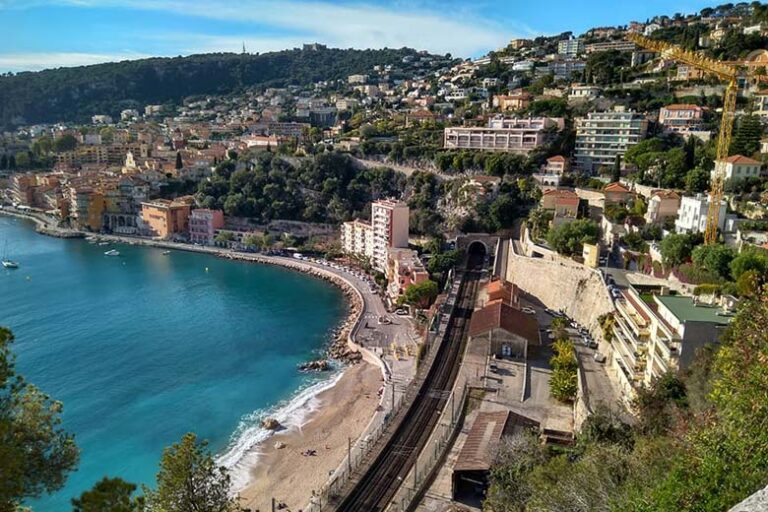
The first destination planned for the day was Villa Ephrussi. We got into the car and drove to Cap Ferrat. Along the winding road, which meanders past green hills and blue shores, we stopped at one of the roadside viewpoints. We gazed, enchanted, at the panoramic view of the Riviera landscape. Once again, we were left speechless by the breathtaking blue vista.
Villa Ephrussi
After a short drive, we arrived at the villa. We parked in the driveway (parking on-site is free) and went inside.
Tip: You can purchase a combined ticket for Villa Ephrussi and the Exotic Gardens in the town of Èze. If you plan to visit both places, this will allow you to save on the entrance fee.
The beautiful pink villa is one of the wonderful gems of the Riviera. Baroness Béatrice Ephrussi de Rothschild (hailing from two Jewish families, the Ephrussis and the Rothschilds) fell in love with the beauty of the site and purchased the land to build her dream home there.
The creation of the gardens took seven years, while the construction of the villa lasted five. during this time, the finest architects carefully selected to cater to every one of Béatrice’s whims were commissioned. By 1912, the villa was complete, and the Baroness began staying there regularly during the winter months (dividing the rest of her time between Paris, Monaco, and Deauville).
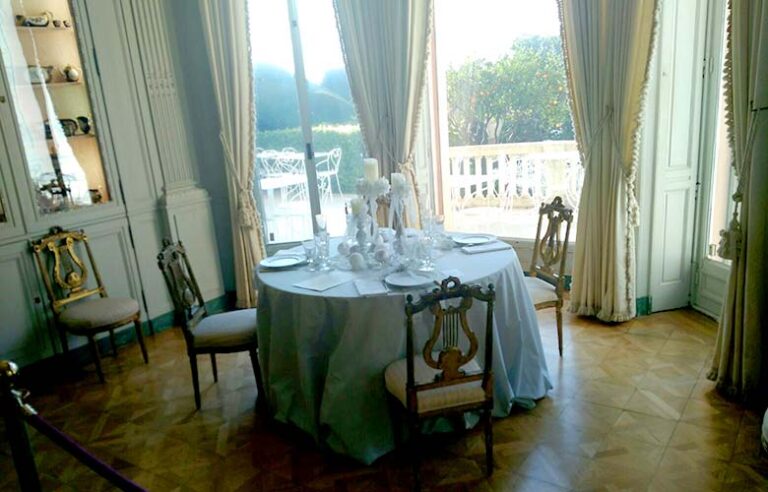
The villa was designed in a Renaissance style and features furniture that once belonged to Queen Marie Antoinette, as well as other pieces in the Rococo style. On the first floor, there are elegant salons adorned with carpets, works of art, and German Meissen porcelain. The rooms also offer a glimpse into the Baroness’s opulent lifestyle, showcasing her collection of gowns and various accessories.
Outside the villa lie magnificent gardens: the main garden—a French-style garden designed by Béatrice and inspired by the gardens of Versailles is adorned with statues, waterfalls, and pools. The sea is visible from every part of the garden, and, adding to the enchantment, musical water displays emerge from the large pool, creating a unique and original aquatic ballet.
In addition, there is a Spanish-style garden in the form of a covered patio, a flower garden, a Japanese garden, an exotic garden, a rose garden, and a Provençal garden featuring olive trees, pines, and lavender.
Upon her death in 1934, the Baroness, who died childless, bequeathed her villa, along with all its art collections and gardens, to the Academy of Performing Arts, and it subsequently became a tourist attraction.
The town of Èze
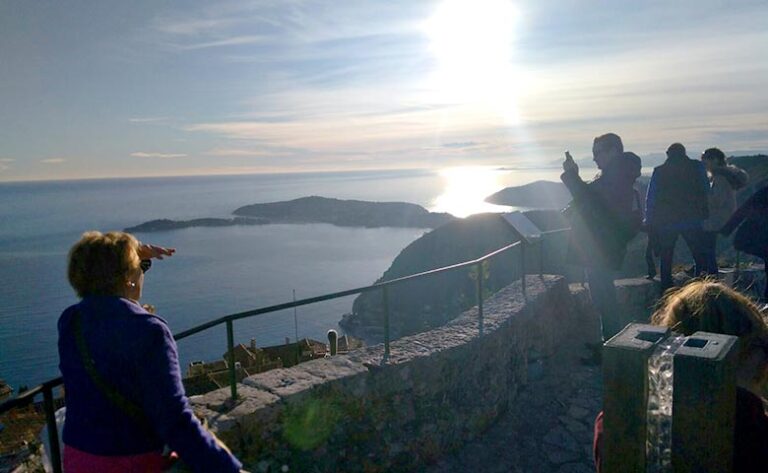
From Villa Ephrussi, we traveled to the town of Èze, situated atop a steep mountain and overlooking the Riviera. Èze is one of the “perched towns”—towns along the Riviera that appear to hang from the mountainside.
We parked in a lot at the entrance to the town (vehicles are not allowed inside) and from there made our way up the steep, enchanting alleyways toward the exotic garden.
The exotic garden features an abundance of cacti in a variety of shapes and colors, but the true star of the garden is the stunning view visible from every corner. We made our way up the garden paths until we reached the summit, where that enchanting landscape appeared once again.
Monaco
By the time we left Èze, it was already late afternoon, and we planned to arrive in Monaco in the evening to experience its atmosphere at night.
On this stretch of the journey, we lost our internet connection since Monaco is considered a separate territory and our mobile plan doesn’t cover it so we relied on Google Maps’ offline navigation.
By the time we arrived in Monaco, evening was already setting in, we managed to catch a glimpse of a glittering amusement park with a Ferris wheel by the water’s edge. We continued driving toward Monte Carlo and found a parking lot right in the heart of the district.
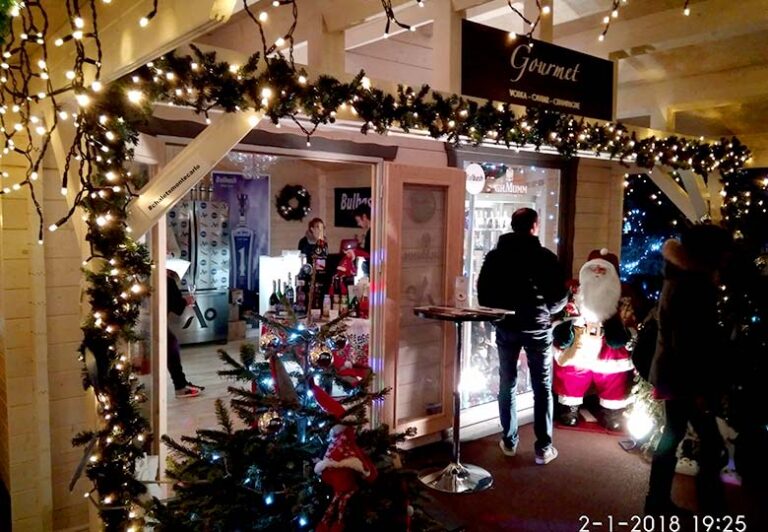
We walked along the beautiful streets toward the casino. The streets are well-maintained as befits such a location and the surrounding buildings are elegant and impressive. On the way, we passed the historic and magnificent Hôtel de Paris. The festive atmosphere that permeates the Riviera is evident here as well: the streets are decorated and illuminated, and throughout the area, there are special stalls serving as pop-up shops for Christmas goods.
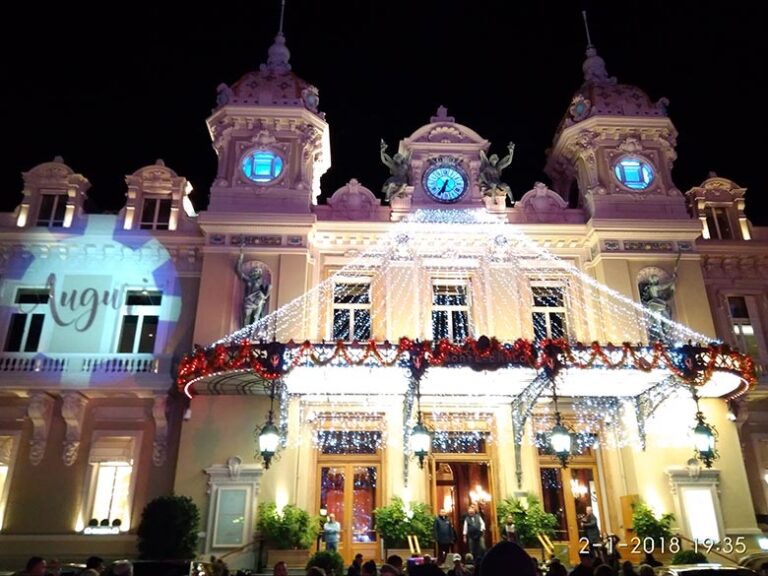
A red carpet, patterned with playing cards, lined the path leading to the Monte Carlo Casino. The building glittered, decorated for the holiday. In the entrance courtyard, luxury cars were parked exuding an unimaginable level of wealth.
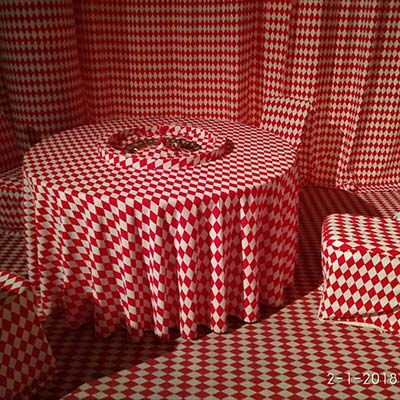
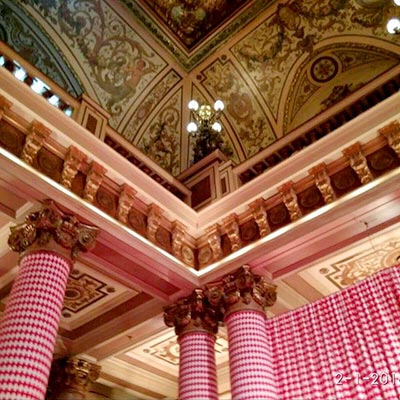
Naturally, we took photos in front of the famous building, and after a security check, we entered the magnificent lobby. Access to the lobby is open to everyone, including children. The space was decorated in a fantastic way for the holiday, decked out entirely in red-and-white checks. We looked up at the grand ceiling, adorned with gold accents, artwork, and crystal chandeliers.
We decided that since we were already there, we had to go inside. We bought an admission ticket for 12 euros. At the entrance, there is a sign explaining the entry requirements—a dress code that prohibits items such as sneakers and short sleeves and of course, a ban on bringing in cameras.
Inside, there are magnificent halls furnished with velvet sofas and armchairs, plush carpets, and grand chandeliers. To the side of the hall, there is a bar with lounge seating. In the center, we saw gaming tables surrounded by various games, as well as, of course, individual gaming machines. All in all, it’s interesting but we weren’t tempted to gamble…
At the end of the busy day, we returned to Nice, parked the car in a lot near the train station, and walked toward the restaurant LE KETER.
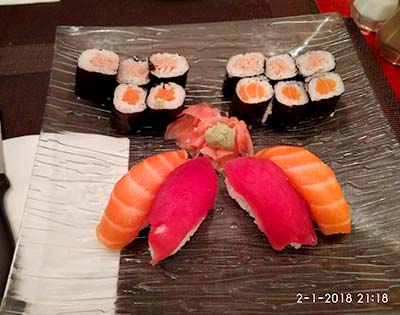
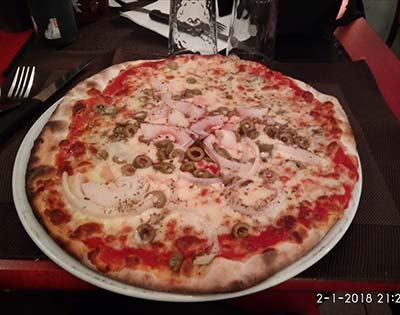
We arrived at the restaurant exhausted and starving. The owner welcomed us warmly and served us some good coffee, once we had recovered a bit, the food arrived—a sushi platter, a pizza, and a bowl of noodles. It was simple, delicious food. We spent a long time there, chatting with the owners about Jewish life in the area. The bill was incredibly affordable—42 euros for two cappuccinos, a beer, a sushi platter, a large pizza, and noodles. An excellent value and highly recommended.
Day Three – Cagnes-sur-Mer
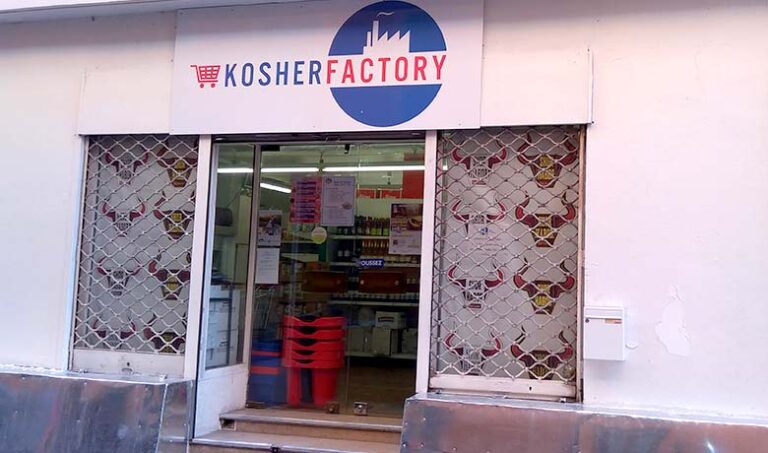
Wednesday was our last day in Nice (we planned to spend the final night in Antibes), so we went to a kosher store to stock up on bread and food supplies. The store is quite large and carries almost everything—dry goods like pasta and cookies, bread, dairy products, deli meats, salads, and more.
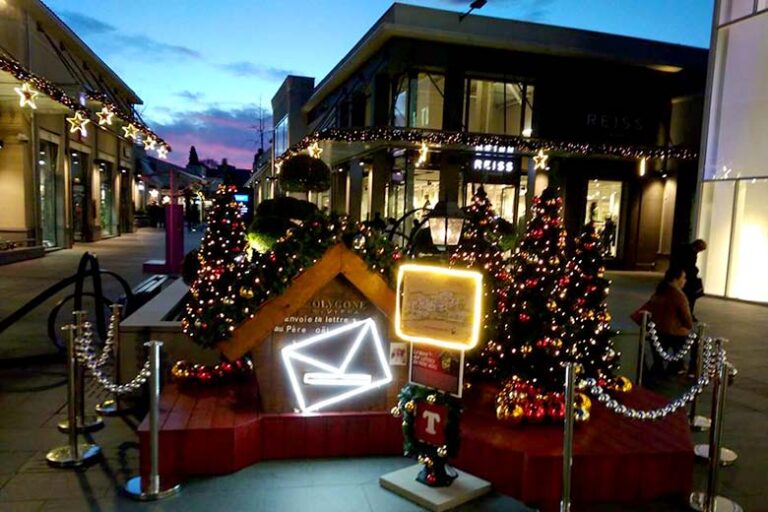
From there, we traveled to the Polygone Riviera shopping center in Cagnes-sur-Mer. It was a very windy day not ideal for sightseeing so we spent the rest of the day there. My husband found a nice café with Wi-Fi and a power outlet for his phone, while I headed off to do some shopping (what can I say, I had promised to bring something back for the kids who stayed home).
This gleaming center is massive, housing branches of virtually every chain—from Levi’s, Calvin Klein, and Lacoste, to Zara, H&M, Mango, and the like as well as specialty stores like TIGER and of course, a large Primark. We spent the day there until evening, when the winds picked up, and then continued on to Antibes.
We drove to Antibes, heading straight to the Royal Antibes hotel on the beach. Here, too, we were welcomed with exceptional courtesy. The hotel staff informed us that the parking lot was full, but told us not to worry, we could simply hand over our keys, and they would take care of parking the car and bringing our luggage up to our room.
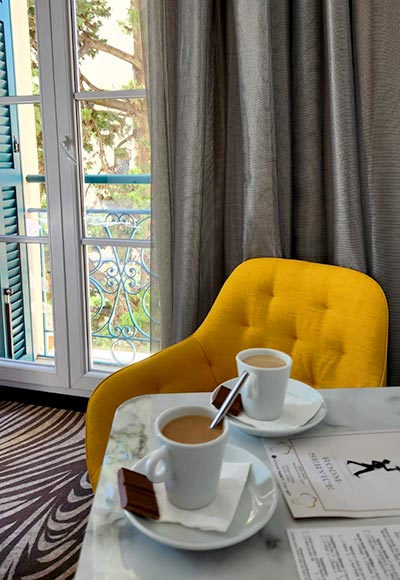
Here, too, a pleasant representative accompanied us to our room and explained everything we needed to know. The room was nice, though a bit small. The hotel features a luxurious, well-equipped spa, but it closes at 7:00 PM, so we didn’t manage to visit it.
The Last Day - Antibes
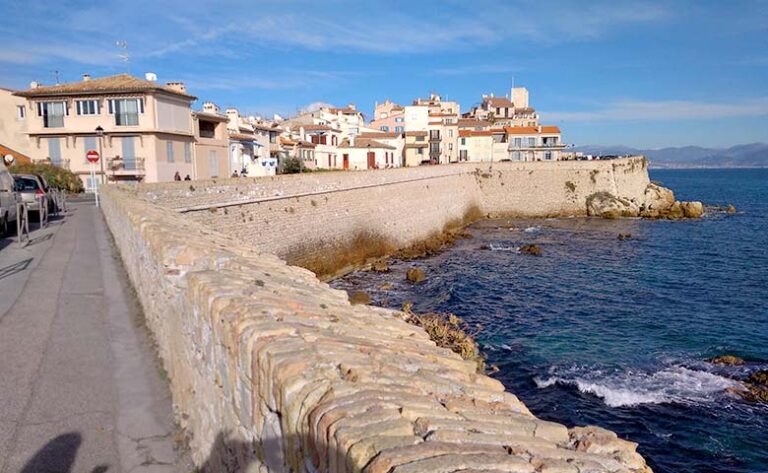
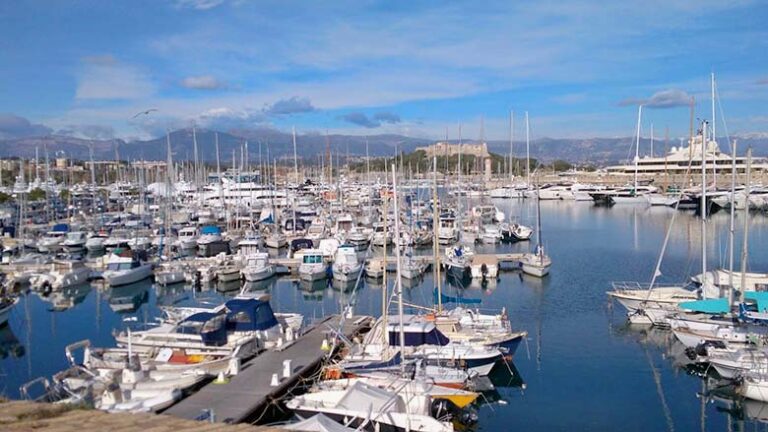
We woke up relatively late and went for a walk in the pleasant area around the hotel. The hotel is located on the waterfront and has a private beach, which was closed at this time of year. We strolled along the coastline and the nearby streets.
When we returned to the hotel, the receptionist suggested that we leave the car in the hotel parking lot and continue to the city center on foot, a 10-minute walk. Naturally, we jumped at the offer and set off toward the Old City.
Antibes was already a settlement in the time of the Greeks, who called it “Antipolis.” Later, the Romans ruled it for 500 years, the city expanded and became the primary maritime gateway in the region. To this day, remnants from the Roman period including aqueducts and fortified walls can still be seen in the area. From the mid-19th century onward, the Antibes area regained its popularity, wealthy individuals from across Europe discovered its natural beauty and built their luxurious homes there.
We walked along the ancient waterfront, where in the distance we saw the massive sculpture Le Nomade—an impressive metal work in the shape of a human head gazing out toward the sea, composed entirely of interconnected Latin letters. We passed the Picasso Museum Picasso himself lived in the city for six months, and arrived at the market.
At the market, as one would expect in a coastal city, there was an abundance of fish of all kinds. The stalls also offered cheeses, vegetables, soaps, and flowers. We enjoyed wandering among the stalls, but we didn’t buy anything, for reasons of kashrut.
From the market, we headed toward the beautiful, ancient streets of Antibes. Here, too, we found a Christmas amusement park, exquisitely decorated shop windows, and a wealth of interesting shops.
We returned to the hotel, got into the car, and drove toward Saint-Paul-de-Vence.
Saint-Paul-de-Vence
One of the places we knew we wouldn’t skip was the renowned artists’ village of Saint-Paul-de-Vence. We drove up toward Provence and, following the signs, arrived at an underground parking lot at the entrance to the village.
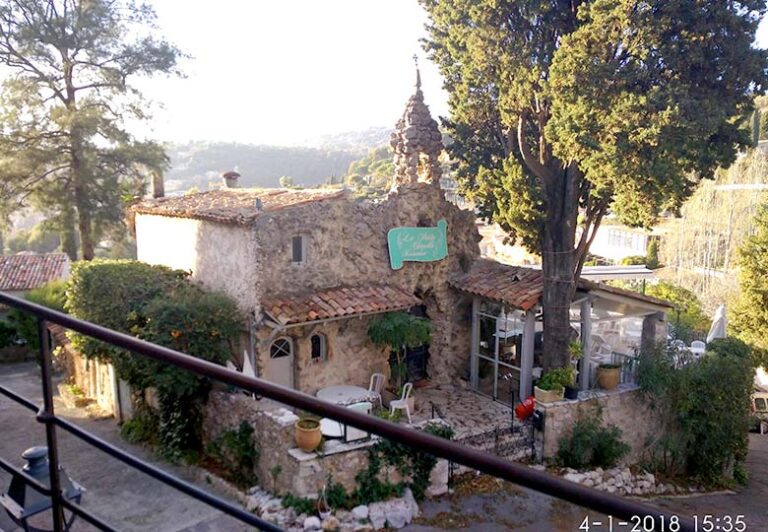
We fell in love with the place at first sight. A picturesque stone house served as a charming shop and restaurant at the entrance to the village.
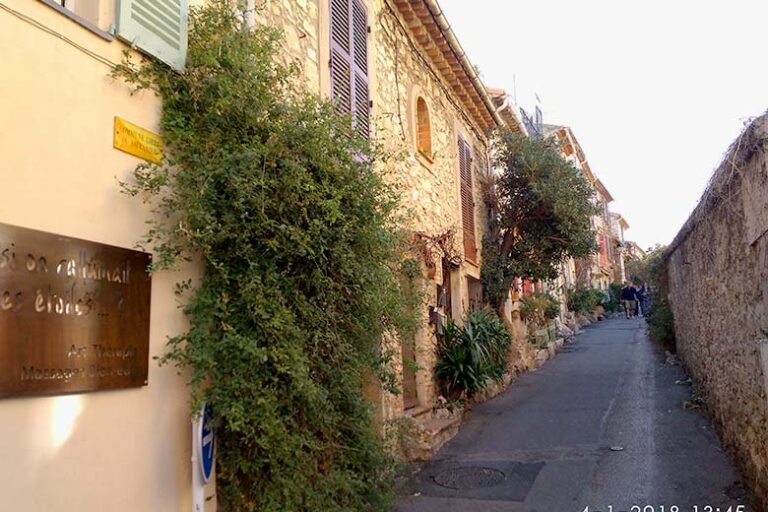
We wandered through the ancient, picturesque paths of the village as if in a dream, a truly magical experience. A medieval atmosphere permeates the narrow alleyways. Here, too, the aesthetic is so striking that even every door and every door knocker has been crafted with great care and artistry. The narrow streets are impeccably maintained and clean, and even the street signs are carved into stone with an authentic, artistic touch.
The village is filled with art galleries and, in the 20th century, became a place of pilgrimage for artists and art enthusiasts. It is no wonder that the painter Marc Chagall chose to live here and spent the rest of his life in the village, he is buried in the local cemetery.
As the sun set, we bid farewell to the village, heading to the airport for our journey home, a perfect finale to our trip to the French Riviera.
An excellent 4-star hotel in the center of Nice. Perfect location—situated near the main street and Place Masséna, yet tucked away on a quiet side street in a beautiful, well-maintained neighborhood. Air-conditioned rooms equipped with an electric kettle, minibar, and coffee machine. Highly recommended based on personal experience!
Tip: The standard room is relatively small, it is worth upgrading for a nominal extra cost to a larger, more spacious Superior room.
A 4-star all-suite hotel in an excellent location in the heart of Nice, a 4-minute walk from Chabad House. The hotel features a swimming pool and on-site parking. The suites are air-conditioned and include a kitchenette with a minibar, an electric kettle, and a microwave.
A boutique hotel located right next to the Chabad House—a 3-minute walk away. The rooms are air-conditioned, soundproofed, and include a coffee/tea-making set.
A very good hotel located 2 minutes from Chabad House Nice and about a 10-minute walk from the Promenade des Anglais. The central train station is 550 meters away. Close to a synagogue, restaurants, and kosher shops.
A wonderful hotel in an excellent location on the Promenade des Anglais, a 10-minute walk from Chabad House. Situated on the beachfront, the hotel overlooks the sea and the Bay of Angels. Facilities include an indoor swimming pool, an outdoor pool, a fitness center, a hammam, and a sauna. The spacious, air-conditioned rooms feature a minibar and tea/coffee-making facilities, most include a balcony with a view. Private parking is available for an additional fee.
A charming apartment in an excellent location in the center of Nice, an 8-minute walk from Chabad House and very close (200 meters) to the Albert Gardens and Place Masséna. For those who keep Kosher: Includes a fully equipped kitchen with a kettle, stovetop, oven, and washing machine.
An excellent hotel located directly on the promenade, just a minute from the beach and a 12-minute walk from Chabad House. Features rooms with sea views, a swimming pool, and other special amenities.
The most famous hotel in Nice—historic, elegant, and luxurious. It overlooks the beach and the Promenade des Anglais. All rooms and suites are individually designed with antique furniture and feature air conditioning and a four-poster bed.
An excellent, indulgent hotel located on the promenade at the edge of the city, less than a 7-minute drive from the airport. Its location makes it ideal for those arriving in the city by car. The hotel features a private beach, a rooftop swimming pool with panoramic sea views, and Wi-Fi throughout the property including on the beach. On-site parking is available for an additional fee. The elegant, air-conditioned rooms are spacious, with some offering a large balcony facing the sea.
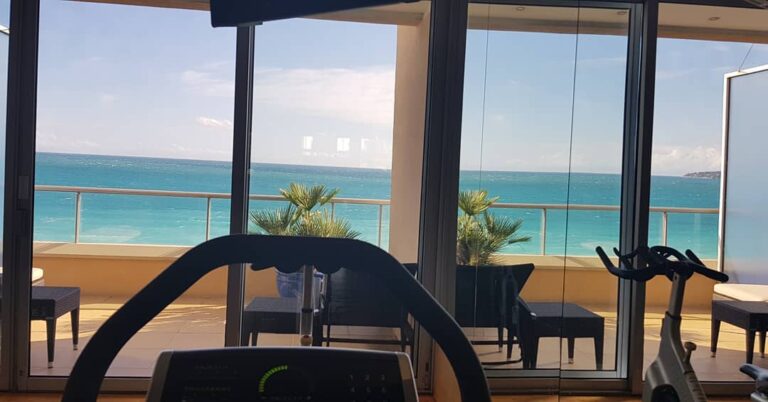
A gym with a view at the Radisson Blu Hotel in Nice.